
Car Travel Accessories for Long Drives: Organization and Safety Essentials
Long drives put different demands on your gear than a quick city errand — hours behind the wheel, unpredictable stops, and the real (if small) chance something actually goes wrong mechanically. The right accessories cover comfort, safety, and keeping track of everything across a full day on the road.
The short answer
For long drives, prioritize safety basics (jumper cables or a jump starter, first aid kit, reflective triangle), comfort accessories that matter over hours, not minutes (a proper phone mount, lumbar support, a cooler), and organization that survives repeated stops (a trunk bin, a back-seat organizer). None of this needs to be expensive — it needs to be reliable and easy to find without digging through the trunk at a rest stop in the rain.
Safety essentials worth keeping in the car
| Item | Why it matters |
|---|---|
| Portable jump starter or cables | Dead batteries don’t wait for a convenient location |
| Tire pressure gauge | Catches slow leaks before they become blowouts |
| First aid kit | Covers the common minor incidents on a long trip |
| Reflective triangle/flares | Visibility if you’re stopped on a shoulder |
| Flashlight | Breakdowns at night are far more common than people expect |
| Phone charger + backup battery | A dead phone during a breakdown removes your best tool |
Comfort accessories that actually matter on long drives
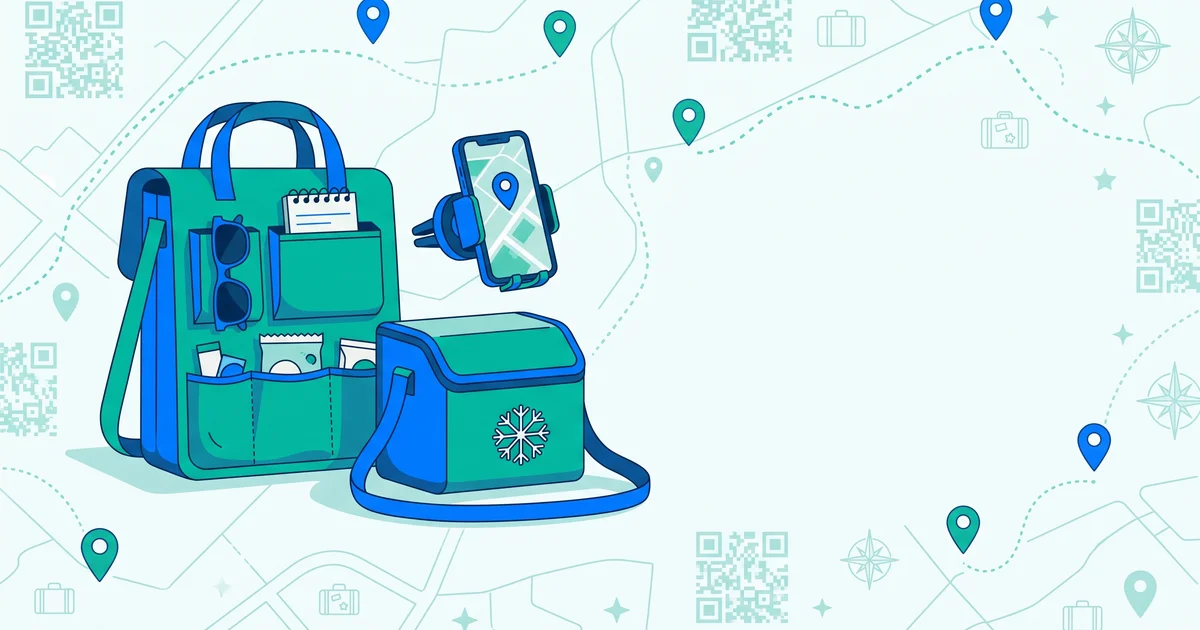
Short trips don’t reveal what’s uncomfortable — hour four or five does. A proper phone mount at eye level reduces glances down at a phone in your lap. Lumbar or seat cushions matter more the longer the drive. A cooler keeps food and drinks off the seats and out of the sun, which both keeps things fresher and reduces clutter that leads to items sliding around and getting lost — see road trip travel accessories for the fuller organization setup.
TagTrek turns any item into a smart QR tag. If it's lost, whoever finds it can reach you in seconds — no app, no account, no GPS tracking.


Organization that survives repeated stops
The accessories that matter most on a long drive are the ones that hold up to being opened and closed a dozen times a day — a trunk bin with dividers, a back-seat organizer that doesn’t slide around, and a dedicated small bag per passenger. This matters because most items lost on road trips aren’t lost while driving — they’re left behind at stops. A consistent system means less digging through everything at each stop, which is exactly when things get left on a counter or under a seat.
Weather and terrain accessories worth adding
Depending on the season and route, a few situational items are worth keeping alongside the core kit rather than buying last-minute at a gas station:
- A set of traction mats or a small bag of sand/kitty litter for winter drives — far cheaper and more effective in a stuck-in-snow situation than waiting on roadside assistance.
- A window breaker/seatbelt cutter tool, mounted somewhere reachable rather than buried in a glovebox, for the rare but serious scenario where the car ends up in water or the doors won’t open.
- Sunshades and a portable fan or 12V cooler for hot-climate drives where a car sitting in a parking lot can become dangerously hot within minutes, not hours.
- A paper map as a backup to digital navigation — offline map downloads cover most gaps, but a paper map doesn’t depend on a charged phone or a working GPS chip at all.
Before you leave on a long drive
- Check tire pressure and fluid levels before departure, not after a warning light comes on.
- Download offline maps for stretches with unreliable cell coverage.
- Pack a physical charging cable as backup even if your car has wireless charging — it’s the first thing to fail or go missing.
- Run through your travel checklist before leaving home even for a drive — it’s easy to assume checklists are only for flights.
Labeling still matters in a car
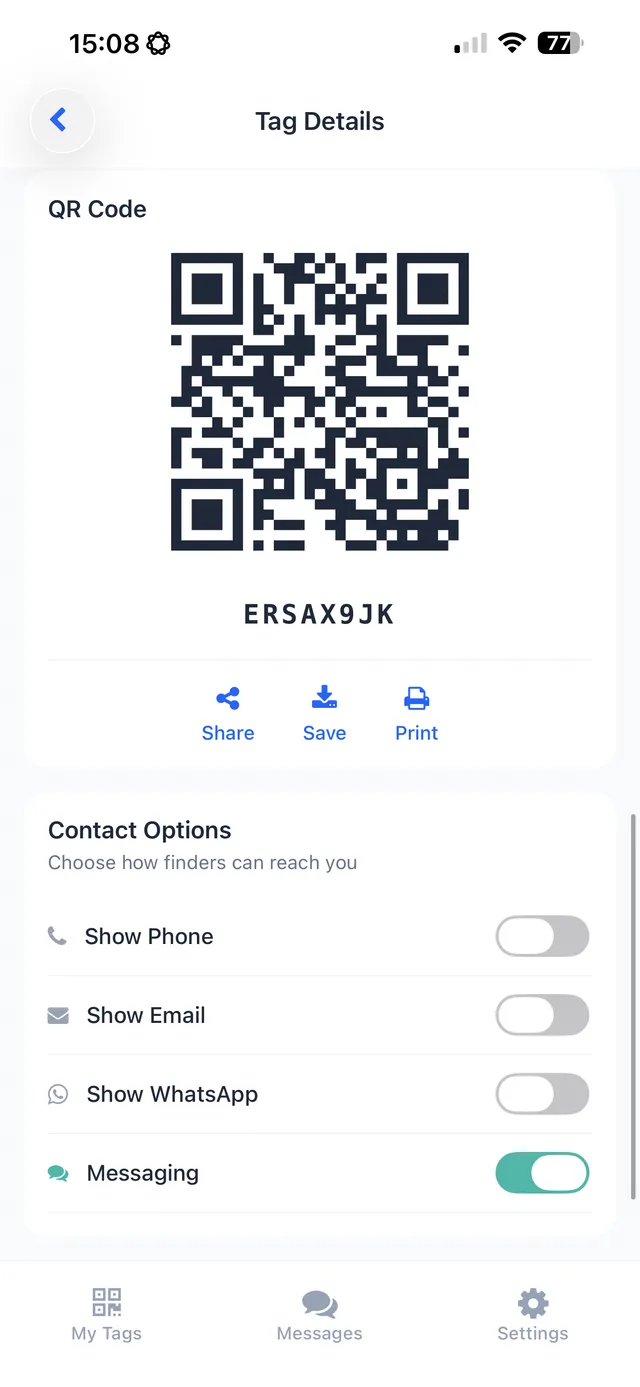
Bags, chargers and gear left at gas stations, hotel lots or rest stops are just as common on road trips as they are at airports — see how to identify your luggage for the same principle applied to a car trip. A visible tag with contact information gives anyone who finds a forgotten bag a direct way to reach you.
The bottom line
Long drives reward preparation more than gadgets — a real safety kit, a few comfort accessories that matter over hours not minutes, and organization that survives repeated stops cover almost everything. For anything that does get left behind at a rest stop or gas station, a TagTrek QR tag lets whoever finds it contact you directly by scanning it, no app needed.
Frequently asked questions
What should be in a basic car emergency kit for long drives?
Jumper cables or a portable jump starter, a tire pressure gauge, a basic first aid kit, a flashlight, an emergency reflective triangle, and a phone charger are the core items most safety guides recommend.
What accessories make the biggest difference on multi-hour drives?
A proper phone mount, a portable charger, seat/lumbar support for longer stretches, and a cooler for food and drinks tend to matter more over a long drive than most novelty gadgets.
Do I need a dedicated GPS device if I have a smartphone?
For most drives, no — a good phone mount and offline map downloads cover it. A dedicated GPS unit is mainly useful in areas with unreliable cell coverage.
How do I keep valuables safe in the car during stops?
Keep valuables out of sight (in the trunk, not on seats), lock the car every time even for quick stops, and label bags and electronics so anything left behind by mistake can still be returned to you.
Never lose your bag again
TagTrek turns any item into a smart QR tag. If it's lost, whoever finds it can reach you in seconds — no app, no account, no GPS tracking.