
Airline Baggage Fees Explained: How to Avoid Surprise Charges (and Lost-Bag Risk)
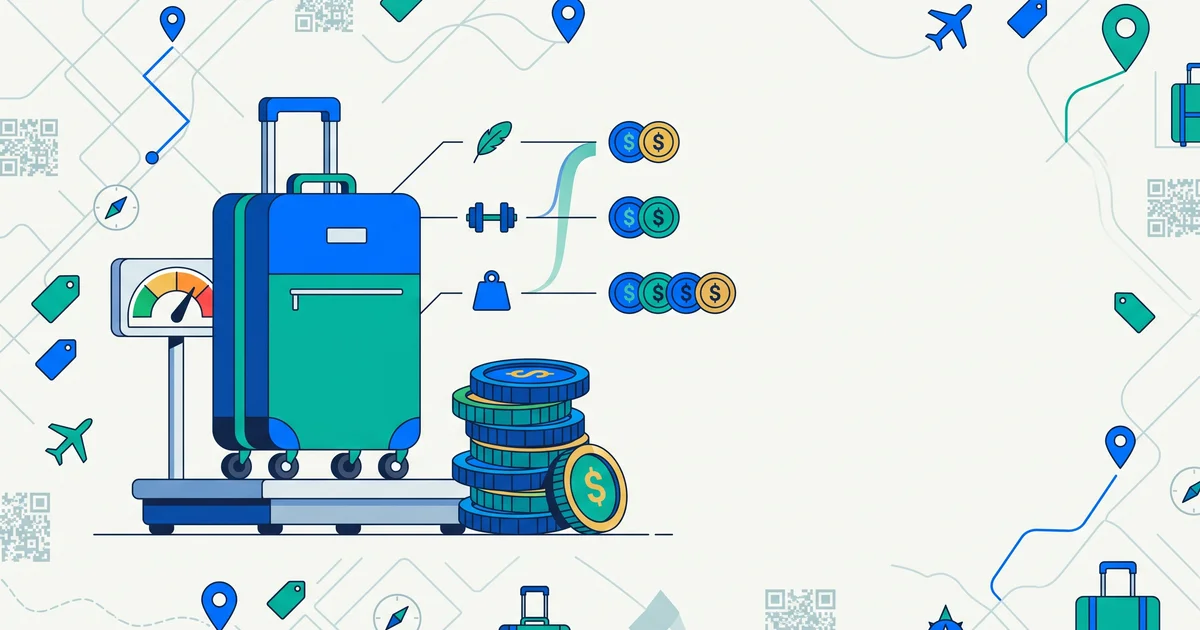
Baggage fees can add more to a ticket price than the flight itself, and the rules differ enough between airlines and fare types that it’s easy to get caught off guard at the gate — often at the most expensive possible moment to pay.
The short answer
Most airlines now unbundle baggage from the base fare, meaning your ticket price often doesn’t include a checked bag, and sometimes not even a full-size carry-on, depending on the fare class. Pre-paying online is almost always cheaper than paying at the airport or gate, sometimes by a significant margin. Basic economy fares are the biggest trap — always check what’s actually included before assuming a “cheap” fare includes a normal carry-on. Beyond cost, checking more bags on a connecting itinerary also means more transfer points where a bag can go missing, so fewer, well-organized bags is often both cheaper and lower-risk.
Typical fee structure (check your specific airline before flying)
| Item | Typical inclusion |
|---|---|
| Personal item (under-seat) | Usually included on all fares |
| Carry-on (overhead bin) | Included on standard fares; often extra on basic economy |
| First checked bag | Fee on most domestic and many international routes |
| Second+ checked bag | Higher fee, increasing per bag |
| Overweight/oversize bag | Separate, often steep surcharge |
Fee amounts and inclusions vary constantly by airline, route and fare class — always verify current fees on the airline’s own site before you pack, rather than relying on what you remember from a previous trip.
Where travelers get caught out
The most common surprise is discovering at the gate that a basic economy fare doesn’t include a full carry-on, only a small personal item — and gate agents often charge the highest rate for anything added at that point, sometimes as a mandatory “gate check” fee. The second most common trap is overweight bags, where an airline’s checked-bag weight limit is strict enough that a slightly overpacked bag triggers a much higher fee than the standard checked rate.
TagTrek turns any item into a smart QR tag. If it's lost, whoever finds it can reach you in seconds — no app, no account, no GPS tracking.


Practical ways to avoid paying more than you need to
- Weigh your bag at home before you leave — a digital luggage scale is inexpensive compared to a single overweight fee.
- Read the specific fare rules, not just the fare name, before booking — “basic economy” means different things on different airlines.
- Pre-pay baggage fees online during booking or check-in rather than at the airport.
- Consolidate into fewer, well-packed bags rather than several smaller ones, both to reduce total fees and reduce the number of transfer points a connecting itinerary exposes your belongings to — see lost luggage on a connecting flight.
- Use packing cubes and compression bags to fit more efficiently into your included allowance — see best travel accessories and the carry-on packing checklist.
How fees differ by route type and fare class
Baggage rules aren’t one-size-fits-all across a single airline’s network, and assuming your last trip’s rules still apply is a common way to get caught out:
- Domestic vs. international itineraries. Many airlines are stricter about checked-bag fees on domestic routes and more generous on long-haul international ones, where a free checked bag is still sometimes included even on economy fares. The reverse assumption — that international flights are always pricier for bags — trips people up regularly.
- Basic economy vs. standard economy. The fare name alone doesn’t tell you what’s included. Two fares both labeled “economy” from the same airline can have completely different baggage allowances depending on whether one is a restricted “basic” or “light” tier — always check the specific fare rules page, not just the price.
- Codeshare and partner-airline flights. When a ticket is booked through one airline but operated by a partner, baggage rules sometimes follow the operating carrier instead of the one you booked with, which can quietly change what’s included or how much a bag costs.
- Connecting vs. single-leg itineraries. Some airlines apply baggage fees per leg on multi-airline itineraries rather than once for the whole trip, meaning a connection through a different carrier can double a fee that looked like a single charge at booking.
Because these rules shift by airline, season and even booking channel, the safest habit is checking the fare rules on the airline’s own site at the time of booking — not relying on memory from a previous trip, even one taken just a few months earlier.
Does paying more actually reduce lost-bag risk?
Not really — fees and mishandling risk aren’t directly linked. What does correlate with risk is the number of handling points a bag goes through, which is why fewer well-chosen bags on a straightforward itinerary tend to be both the cheaper and the safer option. If you’re a frequent flyer optimizing for both cost and durability, the luggage buying guide for frequent flyers covers the gear side of that equation.
The bottom line
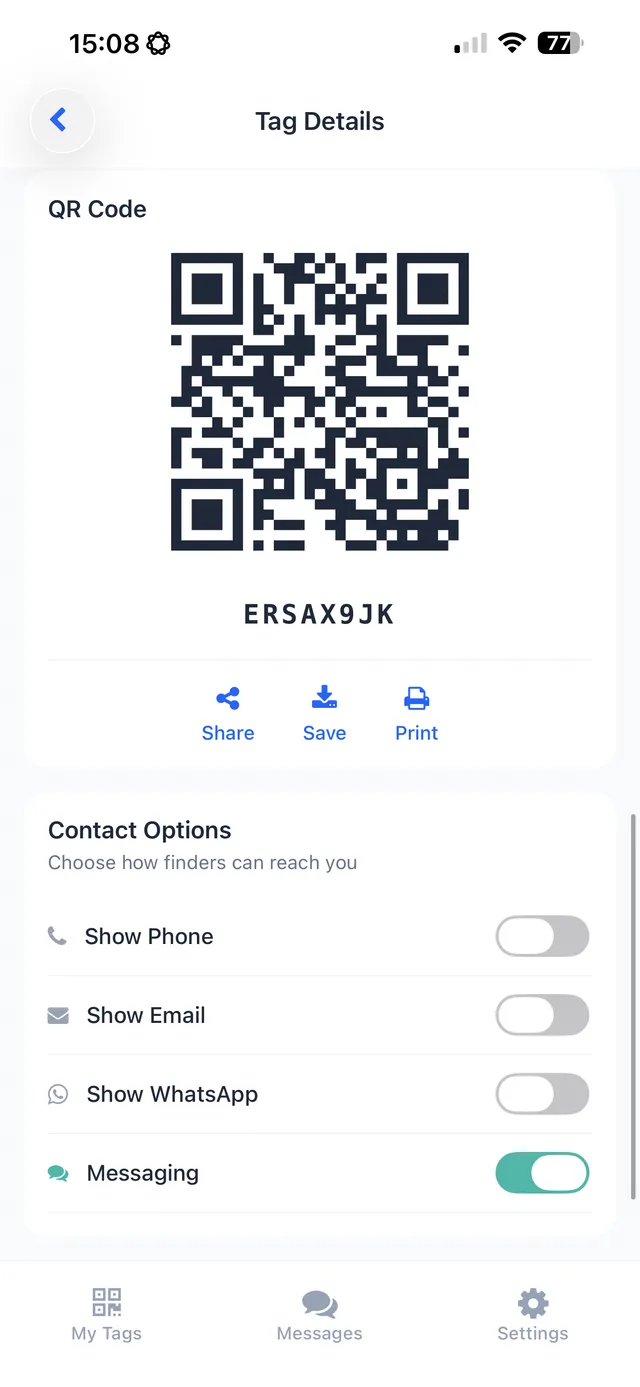
Baggage fees are avoidable friction if you check fare rules and pre-pay before you fly, but no fee structure changes the fact that any checked bag can still be delayed or lost in transit. A TagTrek QR tag on every bag you check means that whatever fee tier you paid, if a bag does go astray, whoever finds it can contact you directly by scanning it, no app needed.
Frequently asked questions
Why do airlines charge for checked bags?
Baggage fees let airlines advertise a lower base fare while charging separately for services not everyone uses, a pricing model called 'unbundling' that's now standard across most budget and many legacy carriers.
Is it cheaper to pay for a checked bag online or at the airport?
Almost always online or in advance — airlines charge a premium for checked bags paid at the airport counter or gate, sometimes significantly more than the pre-paid online rate.
Does basic economy include a carry-on bag?
It depends on the airline — some basic economy fares only include a small personal item and charge extra for a full carry-on, so always check the specific fare rules before you fly, not just the base ticket price.
Does paying for extra bags increase the risk of losing them?
Not directly, but checking more bags generally increases the total number of transfer points your belongings pass through, especially on connecting itineraries, which is where most mishandling actually happens.
Never lose your bag again
TagTrek turns any item into a smart QR tag. If it's lost, whoever finds it can reach you in seconds — no app, no account, no GPS tracking.