
Lost Luggage on a Connecting Flight: Who's Responsible and What to Do
A missed connection is stressful enough when it’s you scrambling between gates — it’s worse when your bag is the one that doesn’t make it. Connections are, by a wide margin, where checked bags are most likely to get separated from their owner.
The short answer
If your itinerary was booked as one connected ticket, the airline operating your final flight into your destination is generally responsible for handling the lost-bag claim, even if the bag was actually left behind on an earlier leg flown by a different carrier — this works through what’s called interline baggage transfer agreements. If you booked separate tickets for each leg, you’re typically responsible for collecting and rechecking the bag yourself between flights, and liability is split by leg. Either way, file your report with the last airline before you leave the airport, not after you get home.
Why connections are where bags actually go missing
Direct flights rarely lose bags — the bag goes on one aircraft and comes off the same one. Connections introduce a physical transfer step: ground crews have to move the bag between aircraft, sometimes across terminals, within the same tight window you have to make your own connection. If your inbound flight is delayed, your body can make a tighter rebooked connection that your bag physically cannot, since baggage handling has its own cutoff times that are often stricter than boarding cutoffs.
Figuring out who’s responsible
| Booking type | Who handles the claim |
|---|---|
| One itinerary, multiple airlines (codeshare/interline) | The airline operating your final flight |
| One itinerary, same airline throughout | That airline |
| Separate tickets booked independently | Each airline for its own leg; you handle the transfer |
If you’re unsure which category you fall into, check your booking confirmation — a single reservation number covering all legs generally means it’s one itinerary even across different airline logos.
TagTrek turns any item into a smart QR tag. If it's lost, whoever finds it can reach you in seconds — no app, no account, no GPS tracking.


What to do the moment you realize your bag didn’t make it
- Go straight to the baggage service desk of your arriving airline before leaving the arrivals area — see lost luggage: first 24 hours.
- File a Property Irregularity Report (PIR) with your bag tag number — this triggers the interline trace.
- Ask specifically whether the bag missed the connection or is misrouted — these have different resolution timelines, and staff can often see this in the system immediately.
- Get a reference number and expected delivery estimate in writing before you leave.
For what happens if the delay stretches on, see delayed baggage claim and how long airlines keep lost luggage if it goes past the usual short-delay window. If it’s an international itinerary, your rights are also shaped by the Montreal Convention.
International connections add an extra layer
Connections that cross a border add a step domestic connections don’t have: in many countries, you’re required to collect your checked bag, clear customs, and recheck it for the next leg, rather than the bag transferring automatically behind the scenes. This is common on itineraries that connect through a country different from your final destination — for example, flying into one country to connect onward to another. If your connection window is short, this customs-recheck step is often where the bag physically misses the flight even though you make it, because passport control and customs queues eat into the same window baggage handlers need. When booking an international connection, it’s worth checking whether the airport is a “bag stays with the airline” transfer or a “you must collect and recheck” one — this is usually noted in your itinerary or the airline’s connection information, and budgeting extra time for the latter can be the difference between a smooth connection and a missed bag.
Reducing the odds it happens to you
- Build in longer connection times when your itinerary allows it, especially on international-to-domestic connections that require rechecking bags through customs.
- Choose the same airline or alliance partners for connecting itineraries where possible — interline transfers are more reliable within a single alliance’s systems.
- Keep essentials in your carry-on — see carry-on packing checklist — so a missed bag connection doesn’t leave you without anything for the first day.
- Make your bag identifiable at both ends of the connection — see how to identify your luggage.
The bottom line
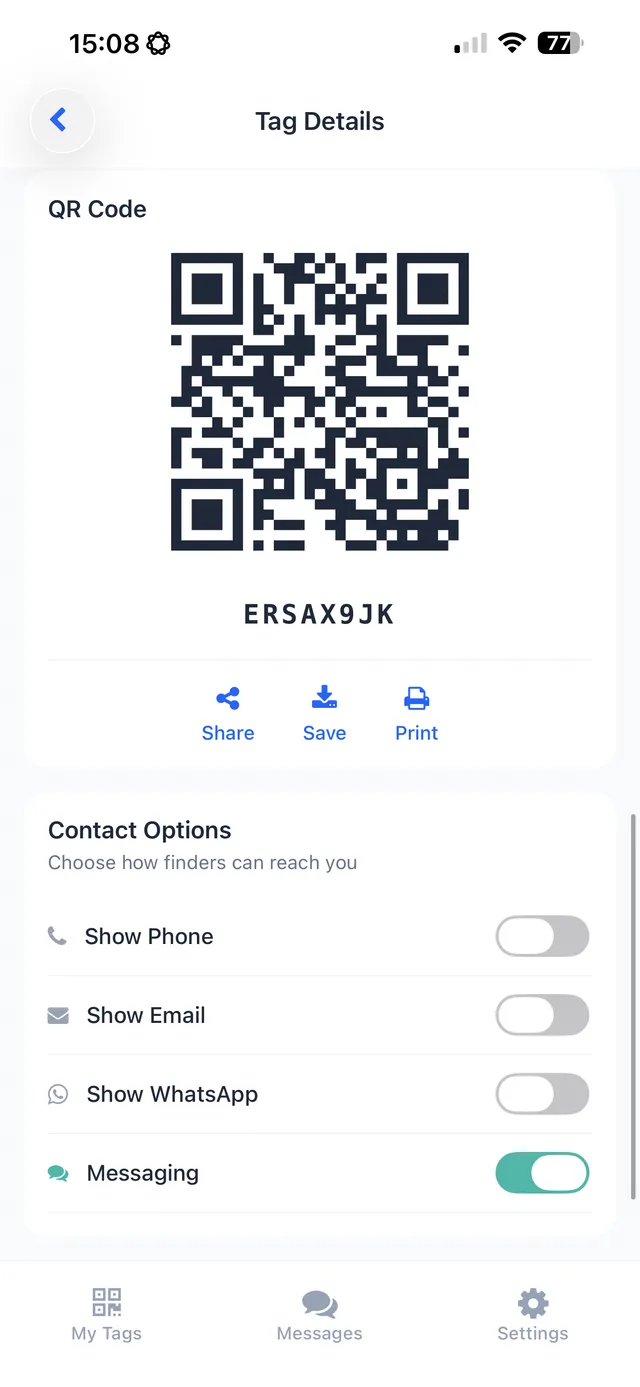
Connections are the single biggest reason bags get separated from their owners, and figuring out which airline is responsible usually comes down to whether you booked one itinerary or several. Whatever the connection, a TagTrek QR tag on your bag means that if it’s sitting at a connecting airport waiting to be traced, ground staff or lost and found can scan it and reach you directly, no app needed.
Frequently asked questions
Which airline is responsible if my bag is lost on a connecting flight?
Generally the airline operating your final flight into your destination is responsible for filing the claim, even if the bag was lost on an earlier leg operated by a different carrier, as long as the tickets were booked as one itinerary.
Why do bags get lost more often on connections than direct flights?
Tight connection windows mean there's less time to physically transfer bags between aircraft, especially if your inbound flight is delayed or you're changing terminals, so the bag can miss the connection your body makes.
What if my connecting flights were booked separately, not as one ticket?
If you booked separate tickets (not one connected itinerary), you're usually responsible for collecting and rechecking your own bag between flights, and each airline's liability applies only to its own leg.
Should I still file a report if I'm not sure which airline is at fault?
Yes — file the report with the airline operating your last flight before you leave the airport. They can trace the bag through the interline system even if it's still sitting at the connecting airport.
Never lose your bag again
TagTrek turns any item into a smart QR tag. If it's lost, whoever finds it can reach you in seconds — no app, no account, no GPS tracking.