
How Airport Lost & Found Actually Works (and How to Beat the Odds)
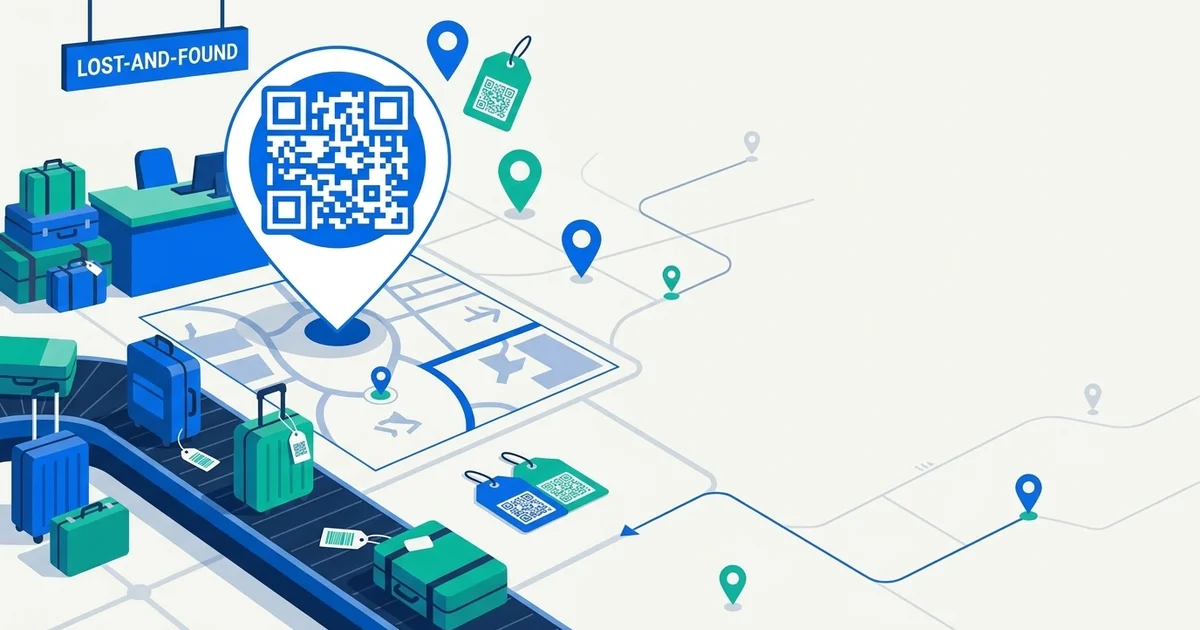
You leave your jacket at the gate, a camera in the seat-back pocket, or a bag at security. Where does it go — and what are your actual odds of getting it back? The honest answer surprises most travelers, and it points to one simple fix.
What happens to a lost item
When staff or another traveler finds your item, the typical path is:
- It’s handed in to the airline (if found on a plane) or the airport’s lost-property office (if found in the terminal).
- It’s logged — described, dated, and stored. Big airports process thousands of items a month.
- It waits in storage for a holding period, often 30–90 days.
- It’s disposed of — donated, auctioned, or trashed — if no one claims it in time.
TagTrek turns any item into a smart QR tag. If it's lost, whoever finds it can reach you in seconds — no app, no account, no GPS tracking.


Why the odds aren’t great
The system works, but it’s stacked against you:
- Matching is manual and messy. Your description has to match a vague log entry across multiple offices and airlines.
- Jurisdiction is confusing. Found on the plane? The airline has it. In the terminal? The airport does. Travelers waste days asking the wrong office.
- The clock is short. Miss the holding window and your item is gone for good.
- Generic items vanish. A black phone or plain jacket with no identifying info is nearly impossible to match to you.

The trick: skip the system entirely
Here’s the insight: the official process is the slow path. The fast path is letting whoever finds your item contact you directly — before it ever gets logged into a storage room you’ll struggle to navigate.
That’s what a QR contact tag does. An honest finder — a fellow passenger, a cleaner, a gate agent — scans the tag and reaches you in minutes. No office, no jurisdiction confusion, no 90-day clock. (It’s the same reason a QR tag beats relying on the airline’s trace for lost luggage.)
How to beat the odds
- Tag your valuables — not just luggage, but laptops, cameras, and jackets.
- Use a privacy-safe QR tag so finders can reach you without seeing your personal details.
- Act fast if something’s gone — contact the right office immediately, given the short holding window.
- Keep descriptions and photos handy to speed any official claim.
The takeaway
Airport lost & found is a slow, manual, time-limited system — and generic, untagged items rarely make it home. The way to beat the odds is to never depend on it: put a scannable QR tag on the things you’d hate to lose, so an honest finder can return them directly and privately. That’s exactly what TagTrek is built for — turning a lost item into a quick, private “found you” message.
Frequently asked questions
What happens to items left at an airport?
Found items are usually logged and held by the airport's or airline's lost-property office for a set period (often 30–90 days). Unclaimed items are then donated, auctioned, or disposed of.
How long do airports keep lost items?
It varies, but most lost-property offices hold items for around 30 to 90 days before disposing of or auctioning them. Acting quickly is essential.
What's the fastest way to recover a lost item?
Make it trivially easy for the finder to reach you directly. An item with a QR contact tag can be returned by an honest finder in minutes — often before it ever enters the official lost-property system.
Does TagTrek help recover items left at airports?
Yes. If your tagged item is found, the person scans the QR code and contacts you instantly and privately — bypassing the slow, low-success official lost-property process.
Never lose your bag again
TagTrek turns any item into a smart QR tag. If it's lost, whoever finds it can reach you in seconds — no app, no account, no GPS tracking.