
Lost Luggage? What to Do in the First 24 Hours
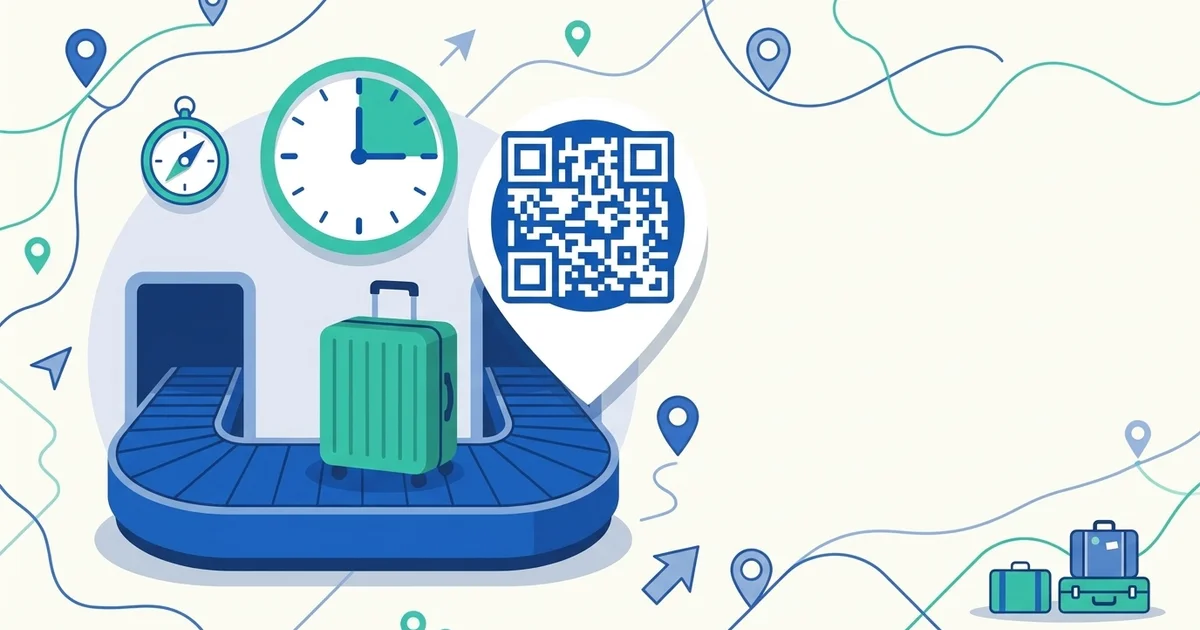
You’re standing at the carousel, the belt has stopped, and your bag never came. It’s stressful — but the first 24 hours matter most, and acting methodically dramatically improves your odds. Here’s the playbook.
Already know the bag is missing and want to see what you can claim? Our free lost luggage compensation calculator estimates it, works out your deadlines and drafts the claim letter.
Step 1 — File a report before you leave the airport
This is the non-negotiable one. Go straight to the airline’s baggage service desk (usually right by the carousels) and file a Property Irregularity Report (PIR). Get a reference number. Many airlines won’t process a claim if you leave the secure area without filing first.
TagTrek turns any item into a smart QR tag. If it's lost, whoever finds it can reach you in seconds — no app, no account, no GPS tracking.


Step 2 — Give them strong identifying details
Describe the bag precisely: brand, color, size, distinguishing marks, and what’s inside. This is where the photos you (hopefully) took before flying pay off. The more specific you are, the faster matching happens.
Step 3 — Confirm how they’ll reach you and deliver it
Make sure they have a working phone number and your local address (hotel). Ask how to track the trace status online and roughly when to expect an update.

Step 4 — Keep every receipt
While your bag is delayed, you’re usually entitled to reimbursement for essentials — toiletries, a change of clothes, chargers. Buy what you reasonably need and keep the receipts; you’ll submit them for compensation. Check your travel insurance and credit-card benefits too — they often cover delay expenses.
Step 5 — Track relentlessly (and use every channel)
Check the trace status daily and stay polite but persistent. If your bag has a smart QR tag, you have an extra channel the airline doesn’t: anyone who physically finds your bag — a fellow traveler, a hotel, a taxi driver — can scan it and reach you directly, often faster than the official trace.
Step 6 — Know the timelines
Most delayed bags are found and returned within a few days. Airlines typically only classify a bag as permanently lost after 21 days, at which point you file a full claim up to the liability limit. Knowing this helps you push for interim compensation while the search continues.
The takeaway
File the PIR before you leave, document everything, keep receipts, and work every channel — official and otherwise. The travelers who get bags back fastest are the ones who act in the first hour and stay persistent. And the ones who skip the airline queue entirely? Usually the ones whose bag had a QR tag a stranger could scan. That’s the whole idea behind TagTrek.
Frequently asked questions
What should I do first if my luggage is lost?
Before leaving the airport, file a Property Irregularity Report (PIR) at the airline's baggage desk and get a reference number. Most claims require that you report it before you exit the secure area.
How long until lost luggage is officially "lost"?
Airlines usually classify a bag as lost (rather than delayed) after 21 days. Most delayed bags are located and returned within a few days.
Can I get compensation for delayed baggage?
Yes. Airlines are generally required to reimburse reasonable expenses for essentials while your bag is delayed, and to compensate for permanently lost bags up to a liability limit. Keep all receipts.
How does a QR tag help with lost luggage?
If someone outside the airline system finds your bag, a TagTrek QR tag lets them contact you directly and privately in seconds — often faster than the airline's own tracing process.
Never lose your bag again
TagTrek turns any item into a smart QR tag. If it's lost, whoever finds it can reach you in seconds — no app, no account, no GPS tracking.