
Lost Dog? What to Do Right Now to Bring Them Home (Step-by-Step)
Few things are as frightening as realising your dog is gone. A gate left open, a slipped lead, a firework-startled bolt — however it happened, what you do in the next few hours makes a real difference. Here’s a calm, practical plan for what to do if your dog is lost, and how to make it easier for someone to bring them home.
The short answer
If your dog is lost: search nearby immediately (calmly, calling their name), alert neighbours, contact your microchip database, call local shelters, animal control and vets, and post clear photos in local community groups. Leave familiar-smelling items outside your home. Don’t chase your dog if you see them — encourage them to come to you. Visible ID with your contact details helps finders reach you fast.
The first 2 hours
| Time | Action |
|---|---|
| Immediately | Search the area on foot; call calmly; bring treats and a lead |
| First 30 min | Tell neighbours; ask them to check gardens, sheds and garages |
| First hour | Report to your microchip database; update contact details |
| First hour | Call local shelters, animal control or dog warden, and vets |
| First 2 hours | Post on local community groups and lost-pet pages with photos |
| Ongoing | Leave a familiar blanket or item with your scent outside your door |
How to search effectively
- Start close to home and widen gradually.
- Search at quieter times — early morning and evening — when your dog may be more likely to move and it’s easier to hear them.
- Bring a squeaky toy, treats, or the sound they know (a food bag rustle, a whistle).
- Check hiding spots: under decks, in sheds, bushes, garages. Frightened dogs often hide.
- Enlist help — more people means more ground covered, but keep everyone calm.
If you see your dog
Many lost dogs, even friendly ones, go into “survival mode” and run from people — including their owners. Don’t chase. Instead:
- Crouch or sit down, side-on.
- Speak softly; avoid staring.
- Toss treats near you.
- Let them approach in their own time.
Alert the right people
- Microchip database: report the dog missing and check your details are current.
- Shelters and rescues: call and visit in person if you can — descriptions over the phone can be missed.
- Animal control / dog warden in your area.
- Local vets: found dogs are often taken to vets for a microchip scan.
- Community groups and neighbourhood apps: post a clear photo, where and when they were lost, and how to contact you.
TagTrek turns any item into a smart QR tag. If it's lost, whoever finds it can reach you in seconds — no app, no account, no GPS tracking.


Make posters
A simple poster works: “LOST DOG”, a large clear photo, breed, size, colour, name, the area, and a phone number. Put them up at eye level near where your dog went missing, in vet clinics, shops and parks.
Prevention: make your dog easy to return
The single biggest factor in getting a lost dog back quickly is how easily a finder can reach you.
| ID method | Strengths | Limitations |
|---|---|---|
| Microchip | Permanent; checked by vets and shelters | Needs a scanner; details must be up to date |
| Engraved collar tag | Anyone can read it | Limited space; tags can wear |
| QR pet tag | Finder scans with any phone; you choose what’s shown and can update it | Needs to be attached securely and kept readable |
In some countries, including the UK, dogs in public must by law wear a collar and tag with the owner’s details, and must be microchipped. Check the rules where you live. A QR tag can be added alongside required ID.
When your dog comes home
Check for injuries, offer water, let them rest and consider a vet check. Then look at how they got out — a gate latch, a gap in the fence, a loose harness — and fix it.
The bottom line
If your dog goes missing, act quickly and calmly: search nearby, alert neighbours, report to your microchip database, contact shelters, vets and animal control, and post clear photos locally. Don’t chase — let them come to you. And make sure anyone who finds your dog can reach you in seconds.
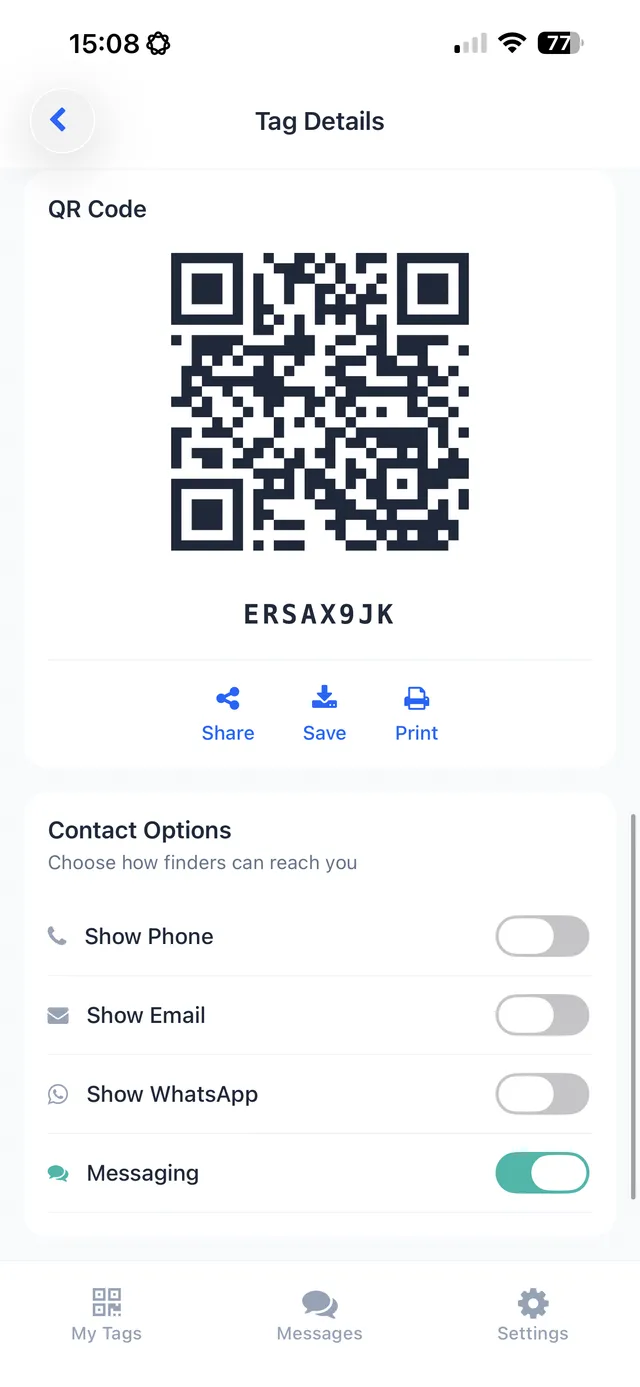
TagTrek can add a scannable layer to your dog’s ID: create a tag for your pet with a photo and a “message if lost”, print the QR, and attach it to the collar. Switch the tag to Lost mode the moment they go missing to show maximum information, and anyone who scans it can call, message or chat with you — no app needed. You’ll get a scan alert showing the city where it was scanned.
Frequently asked questions
What should I do first if my dog is lost?
Search the immediate area calmly, alert neighbours, and contact your microchip database, local shelters, animal control and nearby vets. Post clear photos on local community groups.
Should I chase my lost dog if I see them?
Usually not. Many lost dogs run when chased. Crouch down, speak calmly, avoid direct eye contact and let them come to you, or use a familiar sound or treat.
How far do lost dogs usually go?
It varies widely with the dog's personality, size and surroundings. Many are found fairly close to home, but frightened dogs can travel much further, so search widely and alert a large area.
Does a microchip replace an ID tag?
No. A microchip needs a scanner, usually at a vet or shelter. A visible ID tag lets anyone who finds your dog contact you immediately. Use both, and keep microchip details up to date.
Never lose your bag again
TagTrek turns any item into a smart QR tag. If it's lost, whoever finds it can reach you in seconds — no app, no account, no GPS tracking.