
Checked vs Carry-On Luggage: How to Decide and Reduce the Risk of Losing a Bag
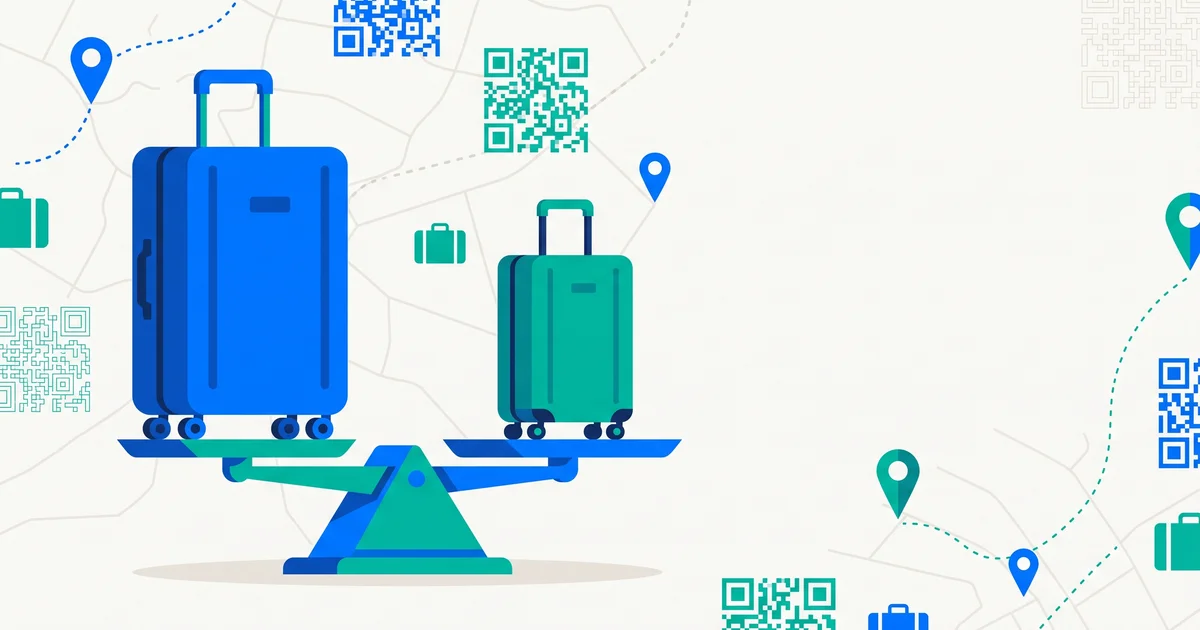
The checked-versus-carry-on decision gets framed as a packing question, but it’s really a risk-versus-convenience tradeoff — and most travelers make it out of habit rather than actually weighing the two sides for the specific trip in front of them.
The short answer
Carry-on luggage carries essentially zero risk of being lost by the airline, since it never leaves your possession — it can’t be misrouted, mishandled, or delayed the way a checked bag can. Checked luggage trades that certainty for convenience: more space, no lifting it into overhead bins, no liquid restrictions, and often a smoother security experience. For most travelers, the right call is carry-on when the trip and packing list allow it, and checked when the trip genuinely requires more than a carry-on can hold — with the understanding that checking a bag means accepting a small but real chance of delay or loss, and packing accordingly.
The real risk difference
Checked bags pass through significantly more handling points than carry-on luggage — loading, unloading, sorting during connections, and transfer between aircraft. Each of those is a point where a bag can be delayed, misrouted, or in rare cases lost outright. Carry-on bags skip all of that simply by staying with you. This doesn’t mean checking a bag is reckless — the overwhelming majority of checked bags arrive without incident — but it’s the honest reason carry-on-only travel has become popular among frequent flyers who want to eliminate that variable entirely.
When carry-on makes sense
- Trips of a week or less, where a well-packed carry-on realistically covers your needs.
- Tight connections, where a checked bag risks not making the transfer even if you do.
- Avoiding baggage fees on airlines that charge for any checked bag.
- Read our carry-on packing checklist for how to actually fit a full trip into carry-on dimensions without leaving essentials behind.
When checking a bag makes more sense
- Longer trips or ones requiring bulky items — winter gear, sports equipment, formal wear.
- Liquids and toiletries beyond carry-on limits that you don’t want to repurchase at your destination.
- Physical convenience — not hauling a full bag through a large airport, especially with kids or mobility considerations; see our family travel tips for more on this tradeoff with kids in tow.
- Fare types that already include a free checked bag, where there’s no added cost to the convenience.
TagTrek turns any item into a smart QR tag. If it's lost, whoever finds it can reach you in seconds — no app, no account, no GPS tracking.


Reducing checked-bag risk if you do check
If checking a bag is the right call for your trip, a few habits close most of the gap with carry-on’s safety:
- Pack essentials and one change of clothes in your carry-on — medication, chargers, a day’s worth of clothing — so a delayed checked bag doesn’t derail your trip.
- Photograph your bag and its contents before checking it, useful for both delay tracking and any claim.
- Choose a bag that’s easy to identify at the carousel — see how to identify your luggage.
- Label it clearly and durably — see what to put on a luggage tag for what actually helps.
- Know what to expect if something goes wrong: lost luggage first 24 hours and lost luggage compensation cover the process end to end.
A middle-ground option
Many travelers land on a hybrid: a carry-on bag for everything essential, plus a checked bag for bulk items they can afford to be briefly without. This limits the actual damage if the checked bag is delayed — you still have your documents, medication, chargers, and a change of clothes — while getting the space benefits of checking a bag for the rest.
The bottom line
There’s no universally right answer between checked and carry-on — it’s a genuine tradeoff between guaranteed safety and real convenience, and the right call changes trip by trip. Whichever you choose, the same principle protects you either way: a bag that’s clearly identifiable and easy to contact you about gets back to you faster if anything does go wrong. A TagTrek QR tag works the same way on a carry-on or a checked bag, giving anyone who finds it a direct, private way to reach you.
Frequently asked questions
Is carry-on luggage actually less likely to get lost than checked?
Yes — carry-on luggage stays with you the entire trip, so it can't be misrouted, mishandled, or delayed by the airline's baggage system the way a checked bag can.
When does it make more sense to check a bag despite the risk?
For longer trips, bulky items, liquids over carry-on limits, or when avoiding the physical strain of carrying everything through a busy airport — the convenience often outweighs the added risk for many travelers.
Does checking a bag cost more than carrying on?
It depends on the airline and fare type — many budget carriers charge extra for any checked bag, while some full-service fares include one free. Compare the total cost, not just the base fare, before deciding.
What's the safest way to check a bag if I have to?
Pack essentials and valuables in your carry-on instead, photograph the bag and its contents before checking it, and make sure it's clearly and permanently labelled with your contact information.
Never lose your bag again
TagTrek turns any item into a smart QR tag. If it's lost, whoever finds it can reach you in seconds — no app, no account, no GPS tracking.