
What to Put on a Luggage Tag (and What You Should Never Include)
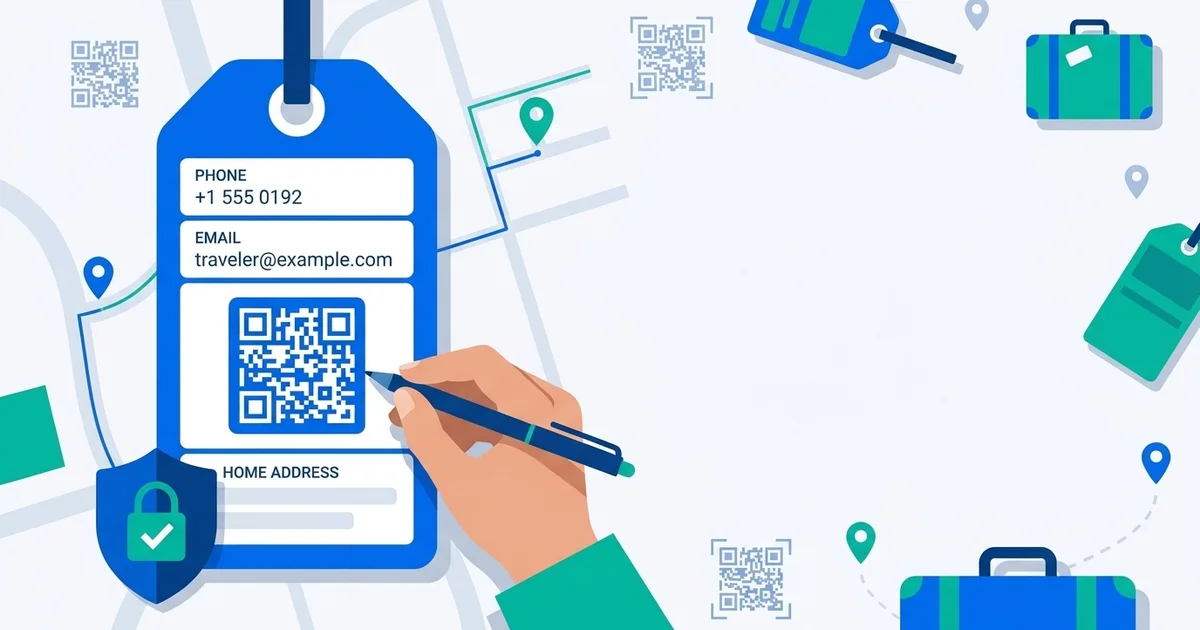
A luggage tag has one job: help an honest person return your bag. But the traditional approach — scrawling your full name, home address, and phone number on a card dangling off your suitcase — quietly broadcasts sensitive information to everyone who walks past. Here’s how to tag smart and safe.
The problem with the classic luggage tag
Think about what a visible tag with your home address actually says: “This person is away from this exact address right now.” That’s useful information to the wrong people — at the airport, in the taxi line, anywhere your bag sits unattended. Yet millions of travelers still do it.
The goal is to be reachable without being exposed.
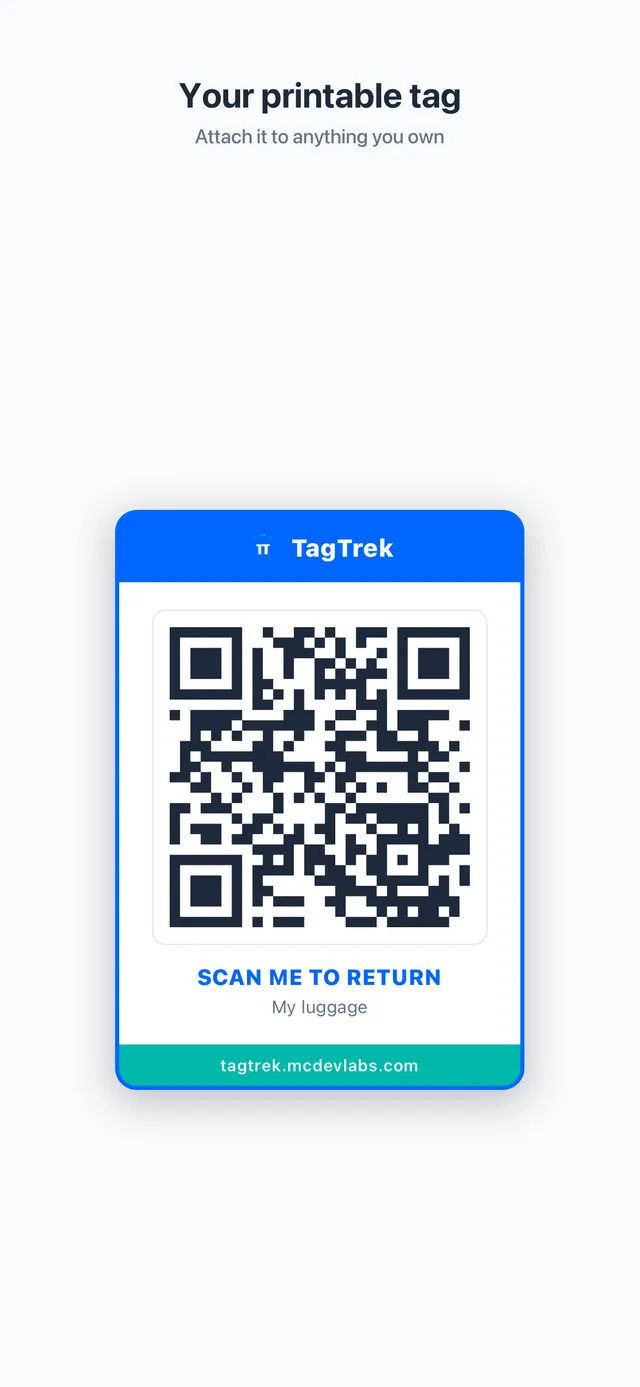
TagTrek turns any item into a smart QR tag. If it's lost, whoever finds it can reach you in seconds — no app, no account, no GPS tracking.


What to put ON the tag (visible)
- A way to reach you — a phone number or, ideally, a scannable QR contact tag.
- Your name or just initials — enough to match the bag to you, not your whole identity.
- Destination/contact city is fine; your full home address is not.
What to put INSIDE the bag (backup)
Outer tags can tear off. Tuck a card inside with fuller contact details — including an address or email — since only someone who already has the open bag will see it. This is your safety net if the external tag is lost.
What to NEVER put on a visible tag
- Your home address. The single biggest mistake.
- Your full itinerary or travel dates. Don’t advertise when you’re away.
- Frequent-flyer numbers or document numbers. Useful to fraudsters, useless to honest finders.
Why a QR tag is the safer default
A smart QR tag flips the model: the tag itself shows nothing personal. A finder scans it and reaches you through a private channel — you decide whether they see a phone number, an email, or just an anonymous chat. You get all the “reachability” of a contact tag with none of the public exposure. (Here’s how QR tags compare to AirTags and Bluetooth trackers.)
That’s exactly how TagTrek works: no GPS tracking, no address on display, just a fast, private path for an honest finder to get your bag back to you.
The takeaway
Put a reachable tag on the outside and a detailed card on the inside — but keep your home address and travel dates off anything a stranger can read. The cleanest way to do that is a privacy-first QR tag, so you’re easy to reach and impossible to snoop on. Pair it with the habits in how to never lose your luggage and you’re covered.
Frequently asked questions
Should I put my home address on my luggage tag?
No. A visible home address signals that your house may be empty while you travel. Use a phone number or, better, a privacy-safe QR tag that hides your details from view.
What information should a luggage tag include?
At minimum, a reliable way to reach you (a phone number or QR contact tag), your name or initials, and ideally a destination contact. Keep sensitive details like your home address off the visible tag.
Is it safe to put my phone number on a luggage tag?
A phone number is lower-risk than a home address, but it's still public. A QR tag is safer because the finder contacts you privately without ever seeing the number.
What makes a QR luggage tag more private?
With TagTrek, the tag shows no personal information. A finder scans it and reaches you through a private channel, and you control exactly what (if anything) is shared.
Never lose your bag again
TagTrek turns any item into a smart QR tag. If it's lost, whoever finds it can reach you in seconds — no app, no account, no GPS tracking.