
Lost Something at the Gym? How Gym Lost and Found Actually Works
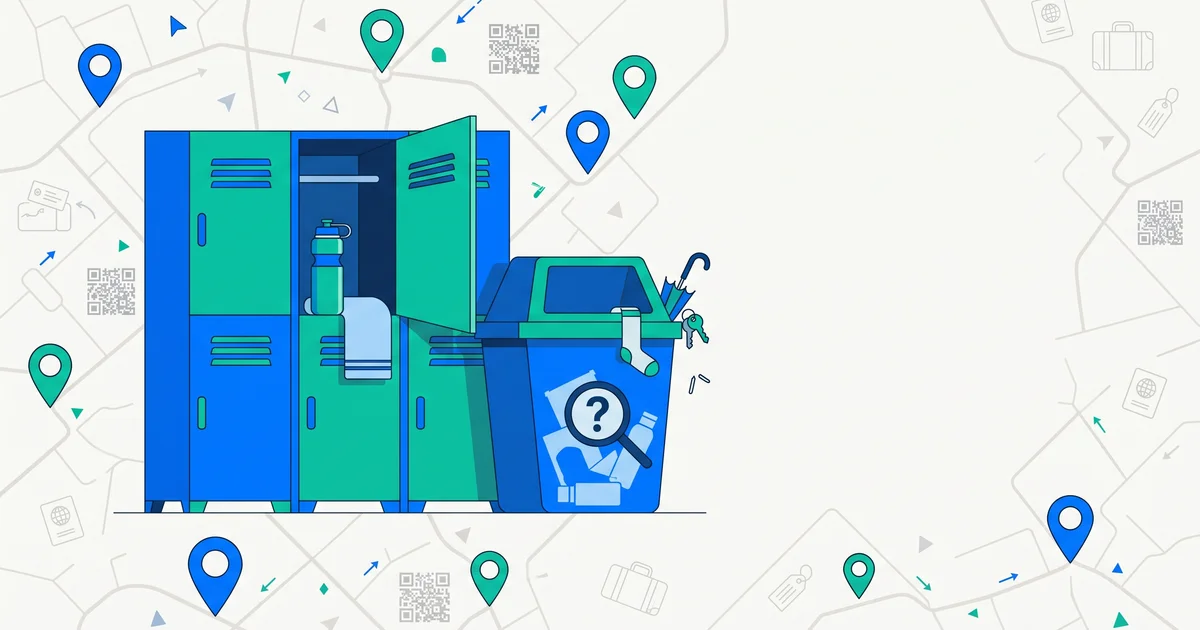
Gyms are a strange middle ground for lost items: busy enough that things go missing constantly, but casual enough that most people don’t expect much of a formal process. That mismatch is exactly why so many water bottles, headphones and towels never make it back to their owners — not because gym staff don’t try, but because nobody involved treats it as seriously as, say, an airport or a hotel would.
The short answer
Ask the front desk directly — most gyms keep a bin, box or shelf behind the counter for lost items, and staff will often let you look through it yourself. Valuables like phones, wallets and keys found in locker rooms are usually handled separately, sometimes locked away or logged more formally, so ask specifically if you lost something of higher value. Check back more than once — gyms often don’t have a consistent process for updating you, so items found after your first visit or call may just sit there until you follow up again.
How most gyms actually handle it
There’s no industry-standard system — gym lost and found is almost always informal compared to larger venues — but the general pattern looks like this:
- A member or staff cleaner finds the item, usually on the gym floor, in a locker room, or left behind on equipment.
- It goes to the front desk, typically into a shared bin with everyone else’s lost items, sorted loosely if at all.
- Higher-value items (phones, wallets, jewelry, keys) are sometimes handled differently — held behind the counter or logged in a notebook rather than tossed in the open bin.
- Periodically, the bin gets cleared — weekly, monthly, or whenever staff notice it’s overflowing — with unclaimed items typically donated to charity rather than kept indefinitely.
Because this process is rarely written down anywhere, the only reliable way to know a specific gym’s policy is to ask staff directly.
What’s most commonly lost — and why it rarely comes back
| Item | Why it’s hard to reunite |
|---|---|
| Water bottles | Nearly identical, unlabeled, low perceived value |
| Headphones/earbuds | Small, easy to overlook in a bin |
| Gym towels | Indistinguishable from gym-owned towels |
| Phone chargers | Left plugged into outlets, forgotten fast |
| Keys | Small enough to slip to the bottom of a bag or bin |
The common thread is that most gym items are generic and unlabeled, which means even a well-meaning staff member has no way to know whose water bottle is whose. This is very different from, say, a wallet with ID inside — the item itself simply doesn’t carry any information about the owner.
TagTrek turns any item into a smart QR tag. If it's lost, whoever finds it can reach you in seconds — no app, no account, no GPS tracking.


Practical ways to improve your odds
- Use a locker, even for a 45-minute session. Most lost items were left on a bench or equipment, not stolen from a locked locker — this is the single most effective habit.
- Put something identifying on the bottle, headphones or towel. A name written in marker, an initials sticker, or a small tag turns an anonymous item into one staff can actually try to return. See how to mark your belongings for low-effort options that work well in a gym environment.
- Check in person, not just by phone, if you can — front desk staff can often glance at the bin faster than they can describe its contents over the phone.
- Ask about valuables specifically. If you lost a phone, wallet or keys, ask whether the gym handles those separately from the general lost-and-found bin — many do.
Why gyms rarely have a “real” system
Unlike a hotel or transit agency, a gym’s core business isn’t handling lost property, and most facilities don’t have dedicated staff or software for it. That’s not laziness — it’s just low volume relative to a venue like an airport. It does mean the burden falls more on you: label things, use a locker, and follow up more than once, because nobody at the gym is actively working your case the way a police property unit might.
The bottom line
Gym lost and found is almost always an informal front-desk bin with no consistent tracking, which means the burden of getting your things back falls mostly on you — locking up your belongings and labeling anything you’re likely to set down. A TagTrek QR tag on your water bottle, headphones or gym bag turns an anonymous item into one that any staff member or fellow gym-goer can scan and contact you about directly, instead of it disappearing into an unlabeled bin.
Frequently asked questions
Where does a gym's lost and found usually keep items?
Most gyms keep a bin or box at the front desk, and larger facilities sometimes have a separate lockbox for valuables found in locker rooms. Ask staff directly rather than assuming there's a public display.
How long do gyms hold lost items before donating or discarding them?
It varies by facility, but many gyms clear their lost and found on a regular schedule — weekly, monthly, or seasonally — and donate unclaimed items rather than storing them indefinitely.
What are the most commonly lost items at gyms?
Water bottles, headphones and earbuds, gym towels, socks, phone chargers, hair ties and small accessories, and occasionally keys, wallets or phones left in unlocked lockers.
Should I use a gym locker even for a quick workout?
Yes. Most items reported lost at gyms were left on a bench, in a cubby, or on top of equipment rather than in a locker — a locked locker is the single biggest thing you control.
Never lose your bag again
TagTrek turns any item into a smart QR tag. If it's lost, whoever finds it can reach you in seconds — no app, no account, no GPS tracking.