
Lost Luggage on International Flights: Your Rights Under the Montreal Convention

If your bag goes missing on an international flight, you’re not just relying on airline goodwill — there’s an actual international treaty setting out what the airline owes you. Most travelers have never heard of it, and most airlines aren’t in a hurry to explain it in detail.
The short answer
The Montreal Convention is the international treaty that governs airline liability for lost, delayed or damaged baggage on flights between countries that have ratified it (most major aviation nations have). It sets a liability limit per passenger, expressed in Special Drawing Rights (SDR) — an IMF accounting unit, not a currency you can hold — currently around 1,288 SDR. Because SDRs are pegged to a basket of major currencies and float daily, the dollar or euro value of that limit shifts with exchange rates; check a current SDR conversion rate rather than quoting one fixed dollar figure, since it will drift over time. The limit is a ceiling, not a guarantee — you generally still need to document your actual loss to claim up to it.
What the Convention actually covers
- Lost baggage — bags never recovered after a defined period.
- Delayed baggage — reasonable expenses while you’re without your bag. See delayed baggage claim for how that process works day to day.
- Damaged baggage — damage during the airline’s custody, covered in more depth in damaged luggage claim.
It applies specifically to international flights between Convention member states. A domestic leg of your trip may fall under different national rules entirely, so the liability limit and claims process can change mid-itinerary on connecting flights.
What it doesn’t cover — the part airlines don’t advertise
- Items specifically excluded or capped lower, commonly cash, jewelry, electronics and fragile items — check the airline’s tariff for specifics.
- The full replacement value of expensive bag contents if it exceeds the SDR limit — this is exactly the gap travel insurance for lost belongings is designed to fill.
- Compensation without documentation — you’ll typically need receipts, photos, or a reasonable itemized list to support a claim near the limit.
- Claims filed late — the Convention and most airline policies require formal written claims within a specific window (commonly 7 days for damage, 21 days for delay from when the bag is delivered) — miss it and you may lose the right to claim entirely.
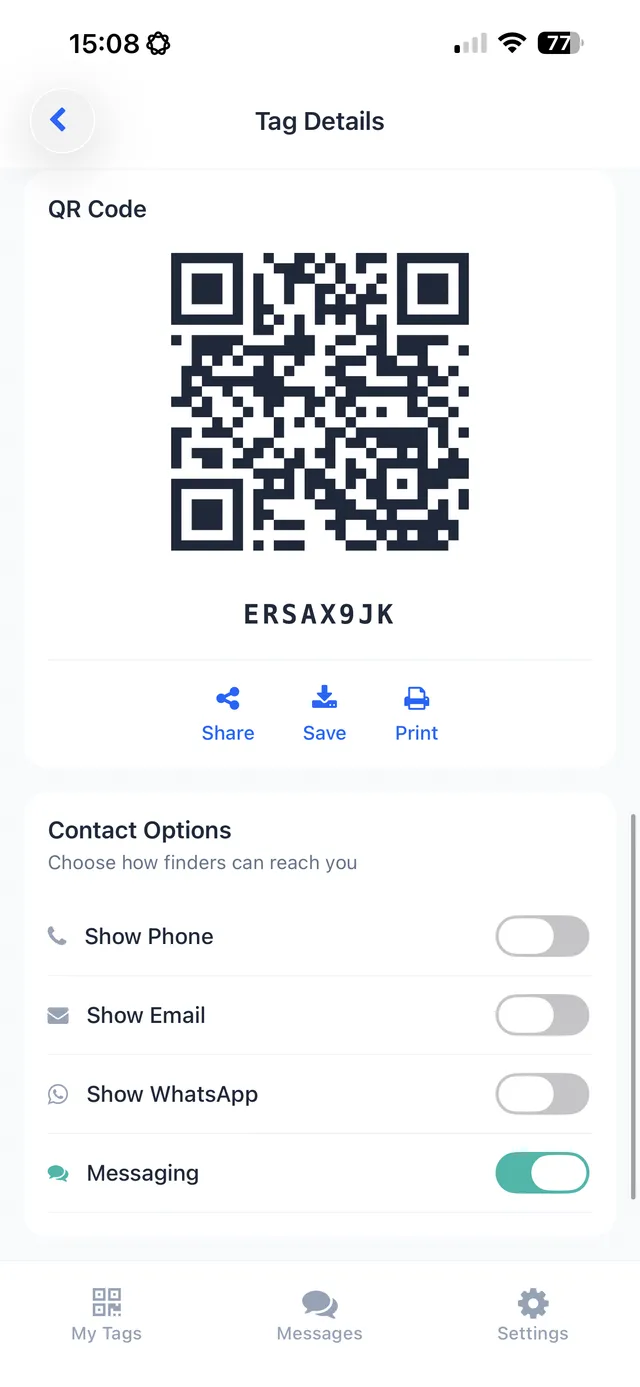
TagTrek turns any item into a smart QR tag. If it's lost, whoever finds it can reach you in seconds — no app, no account, no GPS tracking.


How to actually use these rights if your bag goes missing
- File a Property Irregularity Report (PIR) at the airport before you leave — this is your formal claim record. See lost luggage: first 24 hours.
- Keep every receipt for anything you buy while waiting for a delayed bag — the Convention’s delay liability is meant to cover reasonable interim expenses.
- Document contents and value if the bag is confirmed lost, since compensation claims are assessed against what you can show, not just what you say was inside.
- Escalate in writing within the claim window if the airline’s first offer seems low — you have more leverage than a phone call alone gives you. General context on payout patterns is in lost luggage compensation and lost luggage statistics.
Which airline you actually file against
On a multi-carrier international itinerary, it’s not always obvious who the claim goes to, and this trips up more travelers than the SDR limit itself. As a general rule under the Convention framework, the carrier operating the flight on which the bag was lost, damaged or delayed is the one liable for that specific leg — but if your ticket was issued as a single connected itinerary, the airline handling your final arrival is typically the one you file the PIR with, and they coordinate the trace and claim through the interline system on your behalf rather than you needing to contact each carrier separately. This is worth confirming at the baggage service desk itself, since the exact handling can vary by alliance and by whether the itinerary was ticketed as one reservation or several separate bookings — separate bookings generally mean you deal with each airline independently for its own leg.
Why prevention still matters more than any treaty
The Montreal Convention is a real safety net, but it’s a slow, capped, documentation-heavy process — not a substitute for your bag simply not getting lost, or getting found fast enough that it never becomes a formal claim at all.
The bottom line
International travelers do have real legal protection if a bag is lost, delayed or damaged — but the Montreal Convention’s SDR-based limit is capped, currency-dependent, and requires paperwork most people would rather avoid filing at all. A TagTrek QR tag on your luggage gives baggage handlers, airline staff, or anyone who finds your bag a direct way to reach you before it ever needs to become a formal international claim.
Frequently asked questions
What is the Montreal Convention?
It's an international treaty, ratified by most major aviation nations, that standardizes airline liability for lost, delayed or damaged baggage and cargo on international flights, replacing the older Warsaw Convention system.
How much compensation am I entitled to under the Montreal Convention?
The Convention sets a liability limit expressed in Special Drawing Rights (SDRs), an IMF unit of account, currently around 1,288 SDR per passenger for baggage. Because SDRs float against real currencies, the dollar or euro equivalent changes with exchange rates — check a current SDR conversion rather than relying on one fixed number.
Does the Montreal Convention cover domestic flights?
No, it only applies to international flights between countries that are parties to the Convention. Domestic flights are covered by each country's own consumer protection and airline liability rules instead.
Do I need travel insurance if the Montreal Convention already covers lost luggage?
Often yes — the Convention's liability limit may not cover the full replacement value of your bag and contents, and it doesn't cover everything (cash, jewelry and fragile items are frequently excluded or capped lower), which is where travel insurance fills the gap.
Never lose your bag again
TagTrek turns any item into a smart QR tag. If it's lost, whoever finds it can reach you in seconds — no app, no account, no GPS tracking.