
Miami Airport Baggage Claim: How It Works and What to Do If Your Bag Doesn't Show
Miami International is one of the busiest gateways for flights between the US and Latin America, the Caribbean and Europe, and that international-connection role changes what baggage claim looks like compared to a mostly domestic airport.
The short answer
Check the baggage claim screens for your specific flight’s assigned carousel rather than relying on memory from a previous trip, since assignments vary by flight and terminal. Miami’s role as a major international gateway means many arriving passengers must collect their checked bags to clear customs before rechecking them for a connecting flight — a different, extra step compared to a purely domestic connection, so build in more time than you might elsewhere. If your bag doesn’t show up, go to your airline’s baggage service office before leaving the claim area — follow posted signage or ask any airline staff member for the current location — and file a report with your tag number immediately.
What to expect at baggage claim
Carousel assignments are shown on arrivals screens throughout the terminal and are the most reliable source for where to go, since not every passenger on a shared flight necessarily proceeds to the same claim area. As a large international gateway, Miami handles a high volume of connecting passengers who must clear customs with their checked bags first — if you’re connecting internationally through Miami, allow noticeably more time than you would for a same-country connection, since the collect-and-recheck process adds a real step that purely domestic hubs don’t require.
Why international gateways like Miami see extra baggage steps
It isn’t that Miami handles bags any less carefully — it’s the nature of international connections. A bag arriving from abroad generally has to be claimed, taken through customs, and rechecked for the next flight, rather than staying with the aircraft or being transferred airside the way a domestic-to-domestic connection often is. Each of those extra handling steps is an additional point where timing gets tight, especially on a short layover — the same dynamic covered generally in lost luggage on a connecting flight, amplified by the customs step specific to international gateways like Miami.
TagTrek turns any item into a smart QR tag. If it's lost, whoever finds it can reach you in seconds — no app, no account, no GPS tracking.


If your bag doesn’t arrive
- Don’t leave the baggage claim area without checking with your airline first — see lost luggage: first 24 hours.
- Find your airline’s baggage service office — typically near the baggage claim area, though exact locations vary by airline and terminal, so follow signage or ask staff.
- File a Property Irregularity Report with your tag number to start active tracing.
- Ask about home delivery if the bag is later located — most airlines can deliver a recovered bag rather than requiring you to return to the airport.
If the wait extends beyond a day or two, see delayed baggage claim and how long airlines keep lost luggage. For international itineraries specifically, your rights are also shaped by the Montreal Convention.
If you lost something in the terminal, not checked baggage
Items left at security, a gate, or a shop in the terminal are usually handled through a separate airport lost and found process, distinct from your airline’s baggage office — see how airport lost and found works, and ask airport staff which office applies to your item.
Making your bag easier to track on an international connection
- Use a visually distinct bag — see how to identify your luggage — since a major gateway like Miami processes a very high volume of similar bags daily.
- Keep contact information visible on the bag itself, not just the airline’s paper tag, especially useful if a customs recheck step separates you from your bag briefly.
- Allow extra connection time on international-to-domestic or international-to-international itineraries through Miami specifically.
The bottom line
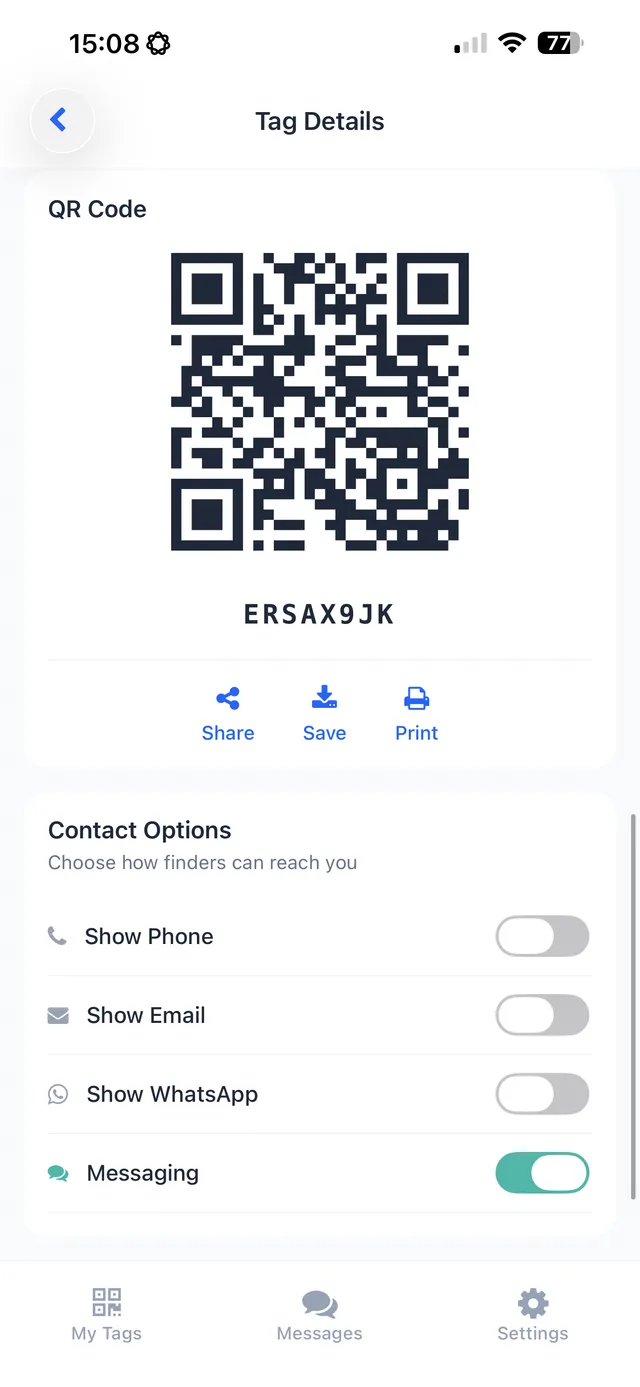
Miami’s role as a major international gateway adds a real extra step — clearing customs with checked bags before rechecking — so building in buffer time and acting fast if a bag doesn’t show up matters more here than at a purely domestic airport. A TagTrek QR tag on your luggage means that wherever in the process a bag gets separated from you, ground staff or baggage services can scan it and reach you directly, no app needed.
Frequently asked questions
How do I find my carousel at Miami International Airport?
Check the arrivals/baggage claim screens in the terminal for your specific flight number — they list the assigned carousel and update in real time, which is more reliable than assuming based on a previous trip.
What do I do if my bag doesn't arrive at Miami International?
Go to your airline's baggage service office before leaving the baggage claim area (follow airport signage or ask any airline agent for directions) and file a Property Irregularity Report with your tag number.
Does connecting through customs in Miami affect baggage claim?
Yes — many international arrivals in Miami require collecting checked bags to clear customs before rechecking them for a connecting flight, which is a different process from a purely domestic connection, so build in extra time.
Does Miami International have a lost and found for items other than checked luggage?
Yes — items lost in the terminal itself (not checked baggage) are typically handled by a separate airport lost and found process rather than your airline's baggage office, so ask airport staff which one applies to your situation.
Never lose your bag again
TagTrek turns any item into a smart QR tag. If it's lost, whoever finds it can reach you in seconds — no app, no account, no GPS tracking.